IUR’s in-house journal Urban Matters has come out with a new edition, “Global South Urbanisms,” guest edited by our colleagues from the Nordic Network of Global South Urbanisms (NEGSU). The issue features an editorial by Claudia Fonseca Alfaro and reflections/transcripts by Laleh Foroughanfar, Yénika Castillo Muñoz, Mateo Villamil-Valencia, and Bruna Rossetti Mendonça from their exchanges with the invited urban scholars from NEGSU’s and IUR’s 2025 programming.
The issue’s illustration is created for Urban Matters by artist David Peter Kerr.
Read the editorial here, authored by Claudia Fonseca Alfaro:
Editorial: Global South Urbanisms
The Southern turn
This special issue is the result of some of the work carried out by the Nordic Network of Global South Urbanisms (NEGSU) during 2025, concretely a lecture series and a collection of interviews with five renowned scholars. NEGSU was born in 2024 at Malmö University from conversations about epistemic injustice among five scholars from Latin America: Claudia Fonseca Alfaro, Adriana de la Peña Espinosa, Bruna Rossetti Mendonça, Yénika Castillo Muñoz, and Mateo Villamil-Valencia. We represented multiple disciplines and career stages, and despite our different understandings of the urban and urbanity, a common interest emerged. We wanted to contribute to the calls to present the geographies of the global South in more nuanced and richer ways, responding to current developments in academia.
The discipline of critical urban studies within the Anglophone world has seen a “Southern” turn over the last decades, guided and led by postcolonial, decolonial, and feminist work. The “southern urban critique”, as Lawhon and Truelove (2020) broadly call it, has not only reinvigorated debates about how we should study and understand cities in the global South – a location outside Euro-America (Comaroff and Comaroff, 2012) – but has also questioned the very foundations of urban scholarship. Powerful interventions have encouraged us to postcolonize the discipline of urban geography (Robinson, 2003) by putting to work “new geographies of imagination and epistemology” (Roy, 2009). Scholars such as Tariq Jazeel, Mary Lawhon, Helga Leitner, Susan Parnell, Sujata Patel, Jennifer Robinson, Ananya Roy, and Eric Sheppard have questioned how a field that is constructed around the experience of a few cities in the West can give us the tools to analyze multiple forms of urbanity and urbanization across the globe. Despite differences in theoretical starting points, what could be broadly referred to as Global South Urbanisms seeks to dismantle the production of urban knowledge that is carried out through Eurocentric lenses by engaging with the global South through an approach that acknowledges historical difference, embodied knowledge, and the existence of a pluriverse of epistemologies (cf. Grosfoguel, 2011; Kimari, 2023).
A lecture series
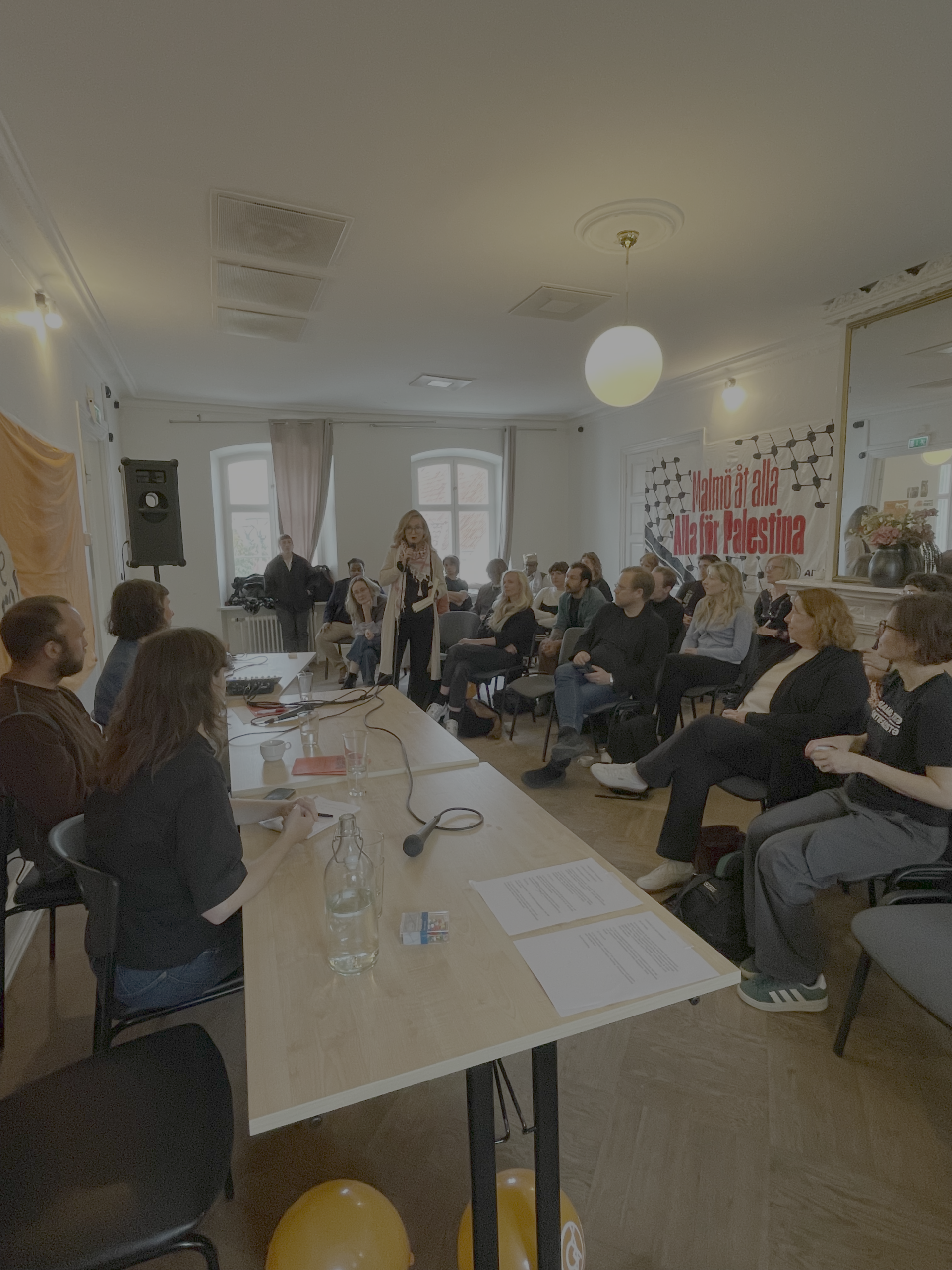
Against this background, it became evident to us that, in the Nordic university context, there was a need to create a space for intellectual discussions that challenged Western-centric conceptualizations of the urban condition. With financial support from the Institute for Urban Research (IUR), the network came to life and was able to organize a lecture series around the theme of Global South Urbanisms. (It is noteworthy that the support from the IUR went beyond financial means. With encouragement and guidance from the IUR’s former director, Guy Baeten, the lecture series eventually became part of a doctoral course led by me and complemented by interventions from Laleh Foroughanfar). With the lecture series, NEGSU aimed to prompt discussions about the current tendencies and challenges within the Anglophone field of postcolonial and decolonial urban studies.
We were aware that the Southern turn in critical urban studies now offers a variety of entry points for rethinking the location, theories, and practices of the field. There have been calls to engage with the “overlooked” (Ruszczyk et al., 2021), the “ordinary” or “off the map” (Robinson, 2002, 2006), the peripheral (Caldeira, 2017) or the “postcolonial city” (Yeoh, 2001). These conceptualizations are complemented by strategies such as decolonizing (Schwarz and Streule, 2016), provincializing (Sheppard et al., 2013), worlding (Ong, 2011; Simone, 2001), and pluralizing through subalternity (Jazeel, 2014; Roy, 2011). Methodologically, researchers have suggested decentering practices through comparative tactics (Robinson, 2016; Schmid et al., 2018), reconceptualizing “the city as text” (Jazeel, 2021), acknowledging the contributions of global South scholars (Kanai, 2014), and challenging epistemic injustice through “dirty research” (Shafique, 2025). However, we also perceived that while this theoretical and methodological richness is cause for celebration, there remains work to be done. Scholars have highlighted how the southern turn has tended to ignore secondary cities (Ruszczyk et al., 2021), warned of the risks of understanding the global South as a geographical location and not a relation (Parnell and Robinson, 2012), and argued that there is a need to clarify “the precise objects and objectives of the southern urban critique” (Lawhon and Truelove, 2020). Alongside this is scholarship that reflects how the “postcolonial condition” exists beyond the global South (Shin, 2021; Tlostanova, 2019), interrogates whether we can even speak of a “south” perspective in urban studies (Patel, 2014) or goes further to question whether urbanization in the global South is “fundamentally different” (Randolph and Storper, 2023).
Inspired by this context, our guiding questions for the lecture series were: How do we address asymmetries in knowledge production? How can we present the geographies of the global South, and other peripheries, in more grounded ways? Can we even speak of a global South? How do we pluralize the field of urban studies through the contribution of a multiplicity of urban experiences, strategies for theory construction, and comparative approaches? We decided to invite scholars who could shed light on these questions through a variety of disciplinary approaches and embodied knowledges. Choosing was not easy, but taking into account our personal academic interests, we extended an invitation to five brilliant scholars: Tariq Jazeel (University College London), J. Miguel Kanai (University of Sheffield), Wangui Kimari (American University Nairobi), Kavita Ramakrishnan (University of East Anglia), and Madina Tlostanova (Linköping University).
A collection of interviews
As the lecture series approached, we began to think about ways to make the most of the opportunities to meet, learn, and think alongside the invited scholars and came up with the idea of a series of interviews that could eventually become part of Urban Matters. Our guests graciously agreed, and the exchanges proved intellectually nourishing. Each visit to Malmö University unfolded over a full day of activities – a seminar with PhD students, a guest lecture, and an interview – during which we had the opportunity to deeply engage with our guest and their work. It was intense but deeply enriching. This special issue is the outcome of this organic work and comprises five interview transcripts, each exploring Global South Urbanisms from a distinct location of embodied knowledge. In the first two interviews, Mateo Villamil-Valencia brings his anthropological lens and interest in critical ontology to his conversations with Wangui Kimari and Madina Tlostanova. Then, in the third interview, Yénika Castillo Muñoz, a feminist and decolonial interaction designer, speaks with J. Miguel Kanai about the role of technology and infrastructure in shaping our understandings of the urban/rural dichotomy. Laleh Foroughanfar – an urban scholar with an interest in urban marginalization, sonic urbanism, and feminist-decolonial epistemologies – facilitates the fourth interview, an encounter with Tariq Jazeel that invites us to reflect on how an “indifference to the urban” can be productive. Last, but not least, Bruna Rossetti Mendonça, a PhD candidate in Social Anthropology with an interest in social movements and collective action, interviews Kavita Ramakrishnan. In their conversation, Bruna and Kavita discuss everyday struggles, the strengths and limitations of working with the concept of the global South, and the possibilities that creative methodologies open up to foster solidarity without the appropriation of knowledge.
In our quest for epistemic justice through the creation of “spaces of fugitive complaint” (Ramakrishnan et al., 2025) in the neoliberal university, I hope that readers find these interview transcripts meaningful.
References
Caldeira TP (2017) Peripheral urbanization: Autoconstruction, transversal logics, and politics in cities of the global south. Environment and Planning D: Society and Space 35(1): 3–20.
Comaroff J and Comaroff JL (2012) Theory from the South: Or, how Euro-America is Evolving Toward Africa. Anthropological Forum 22(2): 113–131.
de Sousa Santos B (2014) Epistemologies of the South. Justice against Epistemicide. Boulder: Paradigm Publishers.
Grosfoguel R (2011) Decolonizing Post-Colonial Studies and Paradigms of Political Economy: Transmodernity, Decolonial Thinking, and Global Coloniality. Transmodernity: Journal of Peripheral Cultural Production of the Luso-Hispanic World 1(1).
Jazeel T (2014) Subaltern geographies: Geographical knowledge and postcolonial strategy. Singapore Journal of Tropical Geography 35(1): 88–103.
Jazeel T (2021) The ’city’as text. International Journal of Urban and Regional Research 45(4): 658–662.
Kanai JM (2014) On the peripheries of planetary urbanization: Globalizing Manaus and its expanding impact. Environment and Planning D: Society and Space 32(6): 1071–1087.
Kimari W (2023) Decolonial Crossroads. Available at: https://antipodeonline.org/2023/10/27/decolonial-crossroads/ (accessed 25 October 2024).
Lawhon M and Truelove Y (2020) Disambiguating the southern urban critique: Propositions, pathways and possibilities for a more global urban studies. Urban Studies 57(1): 3–20.
Leitner H and Sheppard E (2016) Provincializing Critical Urban Theory: Extending the Ecosystem of Possibilities. International Journal of Urban and Regional Research 40(1): 228–235.
Ong A (2011) Introduction: Worlding Cities, or the Art of being Global. In: Roy A and Ong A (eds) Worlding Cities: Asian Experiments and the Art of Being Global. Chichester: Blackwell Publishing Ltd.
Parnell S and Robinson J (2012) (Re)theorizing Cities from the Global South: Looking Beyond Neoliberalism. Urban Geography 33(4): 593–617.
Patel S (2014) Is there a ‘South’ Perspective to Urban Studies? In: Parnell S and Oldfield S (eds) The Routledge Handbook on Cities of the Global South. London: Routledge, pp. 37–47.
Ramakrishnan K, Ghaffar F and Priyadharshini E (2025) Mobilising spaces of fugitive complaint within the neoliberal university. Gender, Place & Culture: 1–19.
Randolph GF and Storper M (2023) Is urbanisation in the Global South fundamentally different? Comparative global urban analysis for the 21st century. Urban Studies 60(1): 3–25.
Robinson J (2002) Global and World Cities: A View from off the Map. International Journal of Urban and Regional Research 26(3): 531–554.
Robinson J (2003) Postcolonialising Geography: Tactics and Pitfalls. Singapore Journal of Tropical Geography 24(3): 273–289.
Robinson J (2006) Ordinary Cities. Between Modernity and Development. London: Routledge.
Robinson J (2016) Comparative Urbanism: New Geographies and Cultures of Theorizing the Urban. International Journal of Urban and Regional Research 40(1): 187–199.
Roy A (2009) The 21st-Century Metropolis: New Geographies of Theory. Regional Studies 43(6): 819–830.
Roy A (2011) Slumdog Cities: Rethinking Subaltern Urbanism. International Journal of Urban and Regional Research 35(2): 223–238.
Ruszczyk HA, Nugraha E and de Villiers I (2021) Overlooked Cities: Power, Politics and Knowledge Beyond the Urban South. London and New York: Routledge.
Schmid C, Karaman O, Hanakata NC, et al. (2018) Towards a new vocabulary of urbanisation processes: A comparative approach. Urban Studies 55(1): 19–52.
Schwarz A and Streule M (2016) A Transposition of Territory: Decolonized Perspectives in Current Urban Research. International Journal of Urban and Regional Research 40(5): 1000–1016.
Shafique T (2025) Dirty research: a call towards decolonial urban knowledge production. City 29(3–4): 502–515.
Sheppard E, Leitner H and Maringanti A (2013) Provincializing Global Urbanism: A Manifesto. Urban Geography 34(7): 37–41.
Shin HB (2021) Theorising from where? Reflections on de-centring global (southern) urbanism. In: Global Urbanism. Knowledge, Power and the City. London: Routledge.
Simone A (2001) On the Worlding of African Cities. African Studies Review 44(2): 15–41.
Tlostanova M (2019) The postcolonial condition, the decolonial option and the post-socialist intervention. In: Albrecht M (ed.) Postcolonialism Cross-Examined: Multidirectional Perspectives on Imperial and Colonial Pasts and the Newcolonial Present. Routledge, pp. 165–178.
Yeoh BSA (2001) Postcolonial cities. Progress in Human Geography 25(3): 456–468.