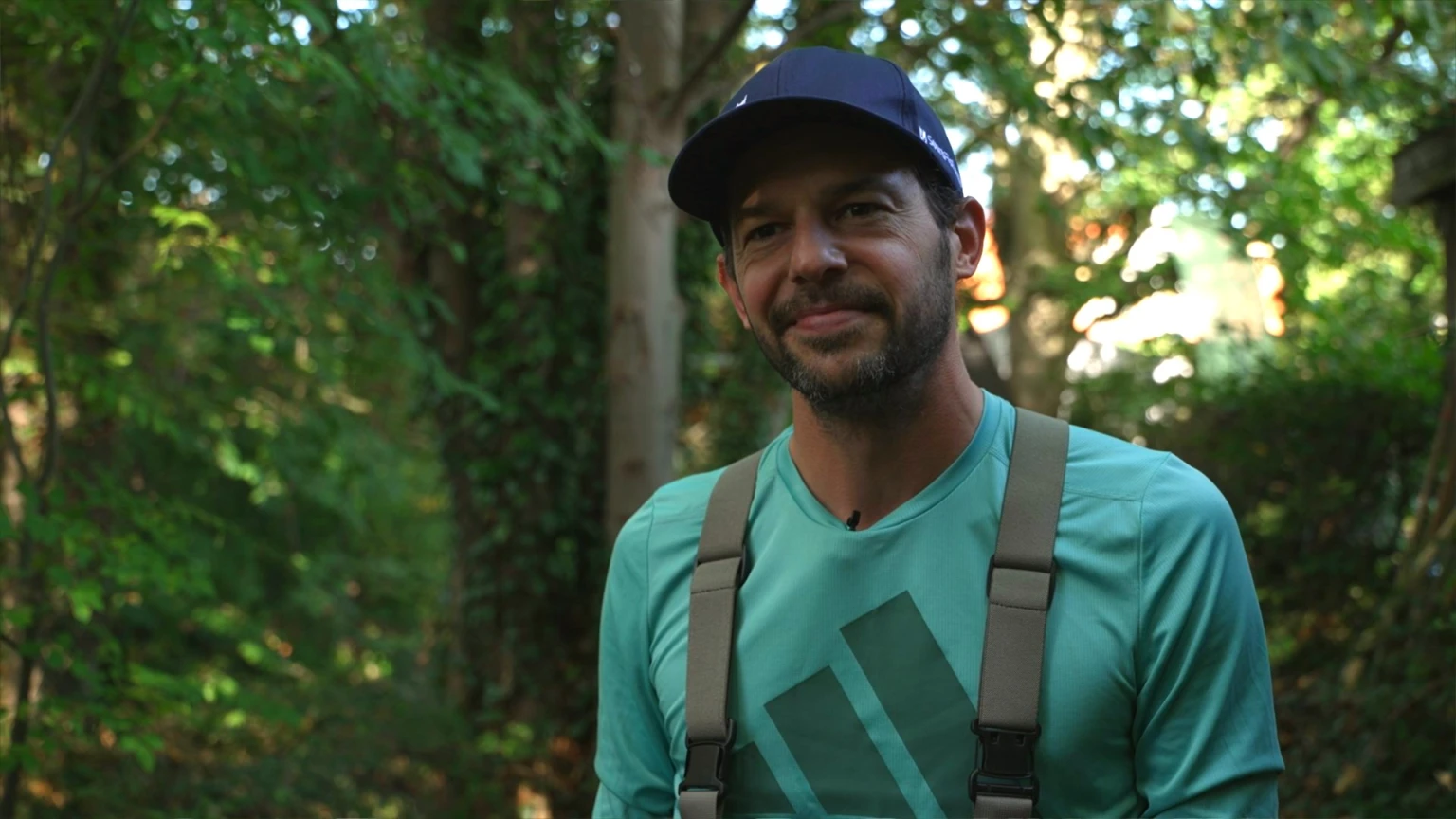
We are thrilled to announce Dr. Friederike Landau-Donnelly as our Artist in Residence for 2025!
Dr. Friederike Landau-Donnelly (*1989, she/they) is an interdisciplinary and intersectional political theorist, urban sociologist and cultural geographer. She is currently a visiting scholar at TU Dortmund University at the Chair of Empirical Cultural Studies and working on a second monograph on conflictual museums in Canada and India. Previously, she has worked as Assistant Professor for Cultural Geography at Radboud Universiteit in Nijmegen, the Netherlands. Friederike writes on artistic and affective activism, spatial politics, public art and contested cultural politics and policies. Among others, she co-edited Handbuch Kulturpolitik (Springer, 2024), Konfliktuelle Kulturpolitik (Springer, 2023), [Un]Grounding – Post-Foundational Geographies (transcript, 2021) and authored Agonistic Articulations in the ‘Creative’ City – On New Actors and Activism in Berlin’s Cultural Politics (Routledge, 2019). Friederike’s research focuses on modalities of conflict in cultural policy, politics and governance as well as in museums, monuments and public space. Friederike publishes poetry as #PoeticAcademic: https://friederikelandau.com/poeticacademic/.
Description of Residency: Exploring the Poetics of Conflict at Folketspark, Malmö
During my stay as an IUR artist-in-residence in February 2025, I will explore Malmö’s contested urban fabric of public and street art through a theoretical lens of agonistic conflict, and through my creative practice of poetry and performative readings. With an embodied approach, I want to sense, learn and engage with questions about the (im)permissibility and (in)visibility of public art: Which art is invited into public space by formal authorities such as city councils, art agencies, or private sponsorship? Respectively, which public art is actively discouraged, criminalized and/or erased? Which political and aesthetic rationales of regulation, order, propriety and cleanliness prevail, and ultimately decide which messages and walls populate the city, and which ones do not? Although, or precisely because public art is a ‘tricky beast’, combining complex terms such as ‘art’ and ‘public’(ness), my body wants to probe crucial democratic questions about belonging, representation and diversity through public art in multicultural cities such as Malmö. Towards the end of my residency, I would like to fuse visual, auditory and poetic data I will collect over the course of three weeks into a multi-media poetic performance to be published, and performed publicly, at Folketspark.